
Franklin County Criminal History Checks
There is no one-stop Franklin County criminal history search. Begin with the record type and the office that created it. The Franklin County Sheriff handles sheriff incident, arrest, booking, and detention records. The Superior Court clerk keeps felony case files. Magistrate Court handles warrant applications and early proceedings, Probate Court handles county traffic matters, and municipal courts keep their own city cases. GCIC is the statewide repository, but Georgia does not provide a general public self-service GCIC name portal.
Gather the full name used at the time, date of birth when lawfully available, spelling variants, event date, report or booking number, and court case number. Confirm identity with more than a name. A common name or an incomplete date can attach the wrong Franklin County record to a search.
- Identify the arresting agency, court, and event location before contacting an office.
- Request the source report or booking record from the agency that made it.
- Match the name, birth data, dates, and identifiers rather than relying on name alone.
- Pull the filed court case to learn the charges, disposition, and sentence.
- Use an authorized Georgia history or certified court copy when that official product is needed.
Four Franklin County Record Offices
The phrase “go to the courthouse” is incomplete in Franklin County. Felony files are held by the Superior and Juvenile Court clerk at 9592 Lavonia Road. Magistrate and Probate functions are at 7085 Highway 145. The sheriff and detention operation use James Little Street. The District Attorney has a Franklin office on Athens Street. The exact office depends on the paper sought.
| Record | Start here | Access channel |
|---|---|---|
| Felony case and disposition | Superior and Juvenile Court clerk | Call 706-384-2514 or use the clerk counter |
| Sheriff report or booking | Sheriff Records Supervisor | Online form, email, mail, phone, or inspection request |
| Warrant or first appearance | Magistrate Court | Call 706-384-7473 and ask about public status |
| County traffic matter | Probate Court | Call 706-384-2403 or follow official traffic instructions |
| City citation | Issuing municipal court | Use that city's court or records custodian |
The official Franklin County homepage is shown below and provides the current department directory.
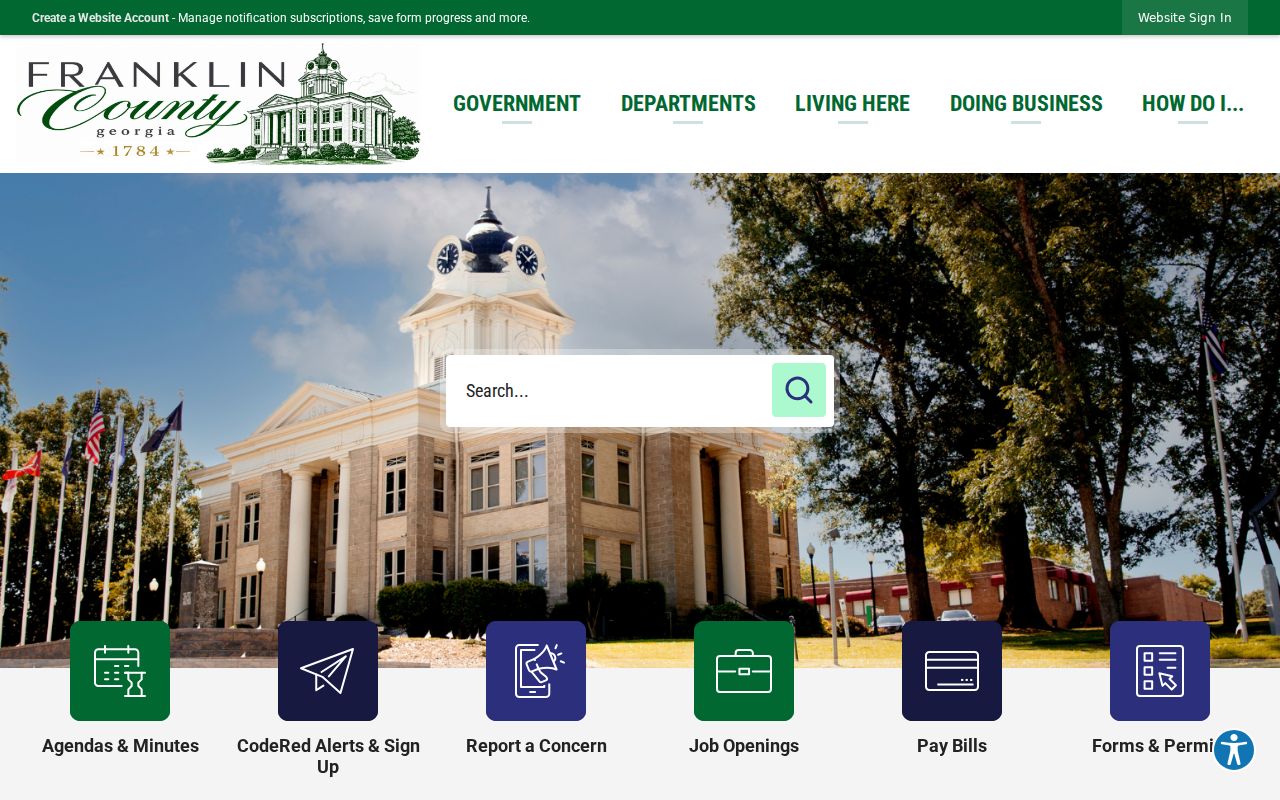
The directory is a routing tool, not a combined criminal-record database.
Official Background Checks in Georgia
The Georgia Bureau of Investigation operates GCIC, the state's criminal-history repository. A Georgia record may include identifying data, reported arrests, final dispositions, and Georgia custodial entries. Access and contents vary with consent, purpose, and agency procedure. Most Georgia sheriff or police agencies can provide criminal-history information under state rules, but there is no general public GCIC pay-per-name website.
For personal inspection, correction, visa, immigration, or another authorized fingerprint purpose, follow the GBI criminal-history instructions. Georgia Applicant Processing Service, operated through IdentoGO, handles authorized fingerprints. Registration begins with the correct service code, and valid photo identification is required at the print site.
The official GCIC record-access page appears below. It is the right source for current inspection and correction rules.
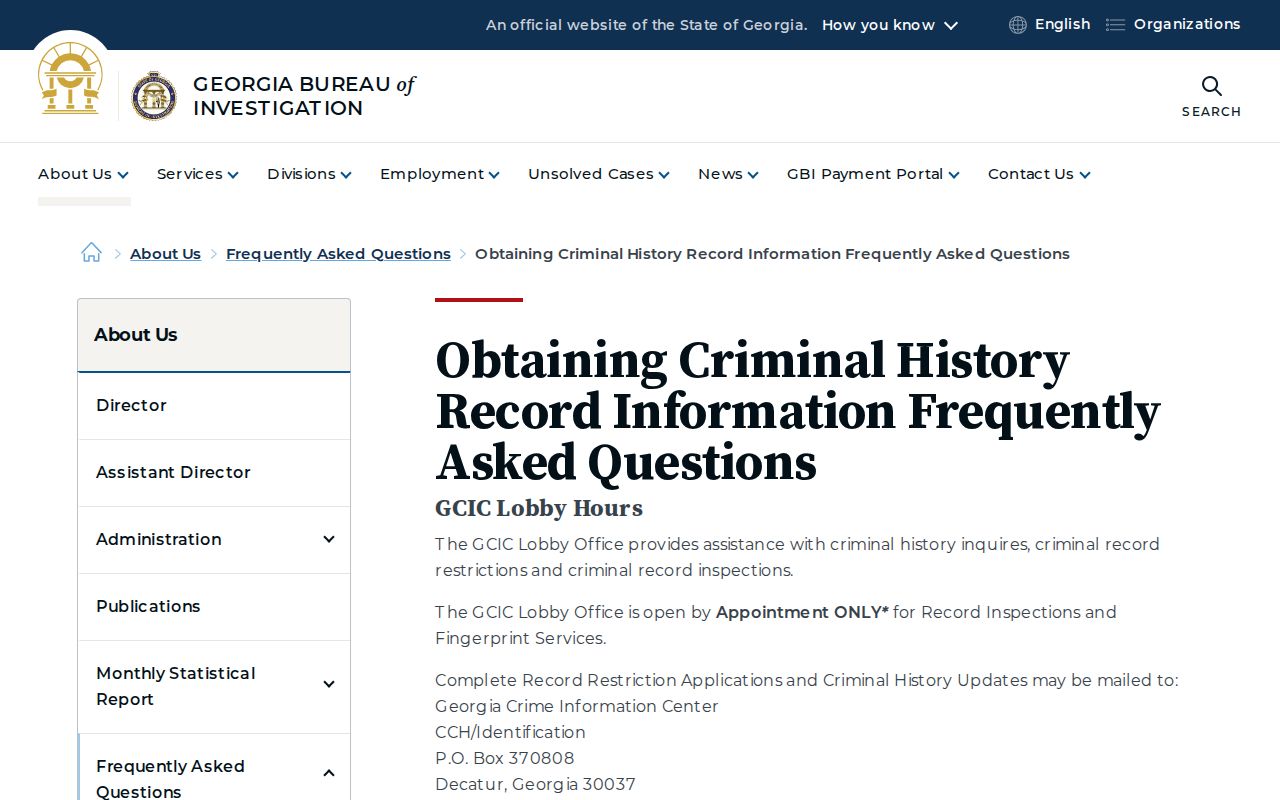
The state instructions help define what a Franklin County name check can and cannot establish.
Franklin County Sheriff Record Requests
The sheriff is the main fallback for sheriff-created incident reports, arrest reports, booking material, detention records, and releasable media in its custody. The official records custodian is Records Supervisor Marcus Greer, P.O. Box 310, Carnesville, GA 30521, mgreer@franklincosheriff.net, 706-384-2525. A request sent to another employee is not deemed filed until it reaches the custodian.
Use the county-hosted form, email, mail, phone, or an inspection request. Describe the specific incident report, arrest or booking record, jail log date range, or body-camera video. Add the report number, date, location, and desired format. The sheriff states that 911 recordings and CAD reports are not in its custody; those go to Franklin County 911/Central Communications at 706-384-7118.
The sheriff's Open Records page is shown below with the current routing and fee method.
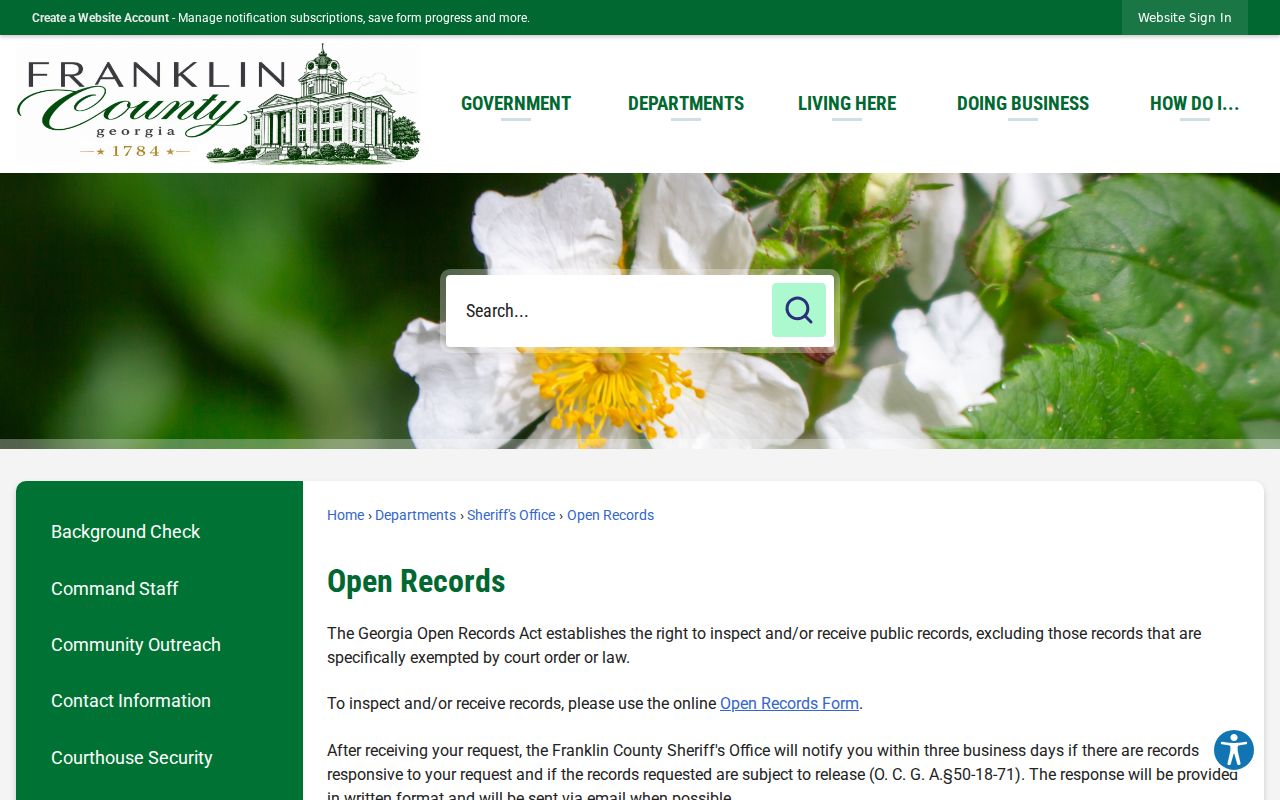
The page also makes clear that the three-business-day rule is a response deadline, not a promise of production within three days.
Kinds of Criminal Records
Franklin County criminal records arise at different stages. Police and sheriff reports document allegations and investigation. Detention staff creates a booking file when a person enters custody. A prosecutor chooses filed charges, and the clerk maintains the docket, pleas, orders, judgment, and sentence. GCIC joins qualifying reported arrest cycles with dispositions. Supervision and registry systems serve still different roles.
A single event can therefore leave several records with different identifiers and update times. Read each Franklin County record for what it proves, and use the next source to answer what it does not.
Georgia does not use one universal letter-grade system for felonies. An offense is a felony when its statute provides death, life, or more than one year of imprisonment. A misdemeanor generally carries up to 12 months and up to $1,000, while a misdemeanor of a high and aggravated nature can carry up to $5,000. The filed statute and final judgment control the classification.
- Arrest and booking records show agency action and custody, not guilt.
- Criminal court files show filed counts, proceedings, dispositions, and sentences.
- GCIC history entries connect qualifying Georgia arrest cycles with reported outcomes.
- Warrant records may begin in Magistrate Court and move with a prosecution.
- Supervision and registry entries address present status or legal duties, not the full case file.
Franklin Booking, Court, and GCIC Records
A booking entry proves that custody occurred. It does not prove the booked charge was filed or resulted in conviction. The court file shows what the prosecutor pursued and how each count ended. A GCIC history is a statewide report built from source-agency submissions. Delayed transmissions, name variations, and missing dispositions can create gaps between the three.
- Booking record
- Detention intake data tied to one custody event.
- Case file
- The clerk's record of filed charges, hearings, pleas, orders, and outcome.
- Disposition
- The final result for a charge, such as conviction, dismissal, or acquittal.
- GCIC cycle
- A reported Georgia arrest linked to reported prosecutorial and court action.
If a GCIC cycle lacks a disposition, obtain the certified outcome from the court or documentation from the submitting agency. GBI cannot simply change source data without supporting agency documentation or authorization.
Franklin County Criminal Records: What They Contain
The fields depend on the source. A sheriff report may include the event narrative and agency number. A booking sheet focuses on intake and release. A Superior Court file can carry the accusation or indictment, count-by-count pleas, motions, judgment, and sentence. A GCIC history may combine reported identification, arrests, dispositions, and custodial data from across Georgia.
| Name & Identifiers | Reported name, aliases, birth data, agency numbers, SID, or tracking identifiers where present |
|---|---|
| Arrest / Booking Data | Agency, arrest date, booked allegations, intake details, bond, and release data by source |
| Charges & Statutes | Filed count, Georgia code citation, offense wording, and charge level |
| Disposition | Outcome for each filed count and the date it was entered |
| Sentence | Custody, probation, fines, conditions, or other terms ordered by the court |
| Custody / Supervision Status | Current GDC, probation, parole, or local status when that system publishes it |
Never infer a conviction from a charge label. Read the final disposition and sentence, then confirm identity and case number.
Franklin County Jail Search Fallback
No official public Franklin County jail roster, booking blotter, or warrant database was verified. For current county custody, call the sheriff at 706-384-2525. For a copy of booking material or a sheriff-originated report, use the Records Supervisor's Open Records route. Ask for a defined date range and record type rather than a broad name search.
Use the Georgia Department of Corrections Offender Search for state prison custody, not a recent Franklin County jail booking. GDC results have their own scope and may require spelling variations. The county detention call, sheriff request, clerk case search, and GDC locator are separate channels because they answer separate status questions.
Georgia Public Access Laws
The Georgia Open Records Act applies to executive-agency records, including releasable sheriff files, but courts are not subject to it in the same manner. Court records are generally open under court law and rules. Active investigations, juvenile material, victim identifiers, medical data, confidential sources, and security-sensitive jail details may be withheld or redacted when a statute applies.
Key Statutes:
O.C.G.A. §§ 50-18-70 through 50-18-77 - The Georgia Open Records Act governs access, response, fees, and exemptions for agency records.
O.C.G.A. §§ 35-3-34 and 35-3-35 - Criminal-history inspection and dissemination depend on authorized access and applicable consent rules.
O.C.G.A. § 35-3-37 - Qualifying Georgia records may follow the record-restriction process.
O.C.G.A. § 42-1-12 - Georgia sets registration, reporting, and public registry duties.
Ask the custodian to cite the specific basis for a withholding and release reasonably separable public portions. A denial by one office does not mean a different source record, such as a filed court disposition, is also closed.
Franklin County Record Fees and Timing
The sheriff says it will notify a requester within three business days whether responsive records exist and are subject to release. If the records are not readily available, the response should give a production timeline. This deadline covers the response, not guaranteed delivery. Payment is due upon receipt under the sheriff's published method.
| Item | Published method |
|---|---|
| Standard black-and-white letter or legal copy | $0.10 per page |
| Search, retrieval, redaction, or supervised inspection | Lowest-paid qualified full-time employee's hourly rate |
| First labor period | First 15 minutes free |
| Nonstandard media | Actual reproduction expense |
| Statutory record fee | The specific statute controls when applicable |
Clerk, municipal, certified-copy, and fingerprint charges can follow different schedules. Confirm the current price and accepted payment method with the office before ordering.
Restricted, Sealed & Expunged Records
Georgia uses the term record restriction under O.C.G.A. §35-3-37. Restriction limits public dissemination of qualifying criminal-history information; it does not erase or destroy the source record. Court-record sealing may be a companion step. First Offender Act treatment, a pardon, and juvenile confidentiality are separate legal concepts with different effects.
The process depends in part on the arrest date and outcome. For arrests before July 1, 2013, the request generally starts with the arresting agency. For later arrests, the prosecutor handles eligible restriction decisions through the statutory route. A denied request may have a Superior Court appeal path. People reviewing their own Franklin County criminal history should compare the source disposition with the GCIC entry before seeking a correction or restriction.
Franklin County Probation and Parole Records
The Georgia Department of Community Supervision supervises adult felony probationers and parolees through state field offices. Local or private misdemeanor probation arrangements may apply to lower-court sentences. The court file remains the best source for the sentence itself. DCS information concerns supervision, while the Georgia State Board of Pardons and Paroles handles parole authority.
The official DCS page appears below and provides current state field-office resources.
DCS should not be used as a substitute for the Franklin County judgment that imposed the sentence. The Georgia State Board of Pardons and Paroles page is shown below for parole authority and current state information.
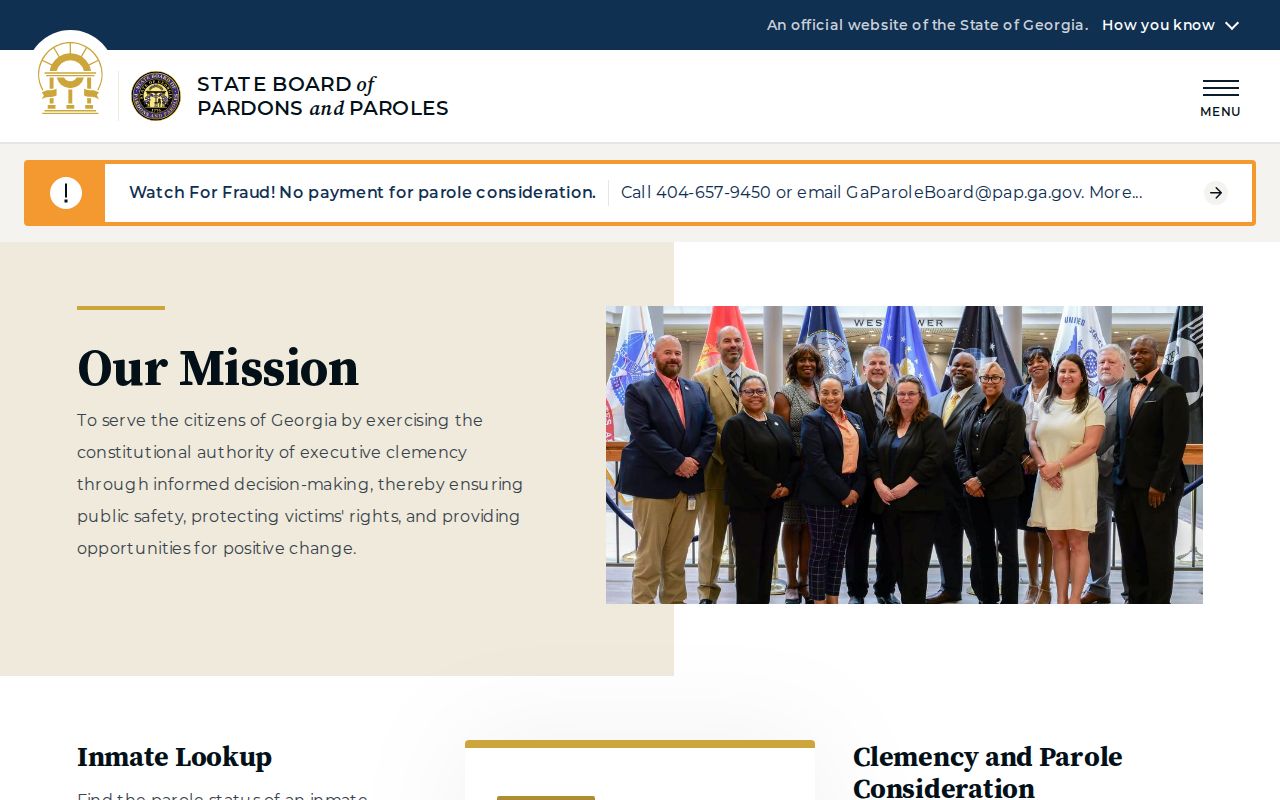
Together, the court, DCS, and parole-board records explain different parts of a supervision history.
Franklin County Records Flow to GCIC
An arresting agency creates the report. Detention staff creates a separate booking record and captures fingerprints. The prosecutor chooses accusations or indictments, and the clerk maintains the court file. Courts and other justice agencies report final dispositions and custodial updates to GCIC. A state history is only as complete as the source data reported and matched.
The official GCIC program page is shown below. It identifies the state repository's role in criminal history, fingerprints, crime reporting, and other justice data.
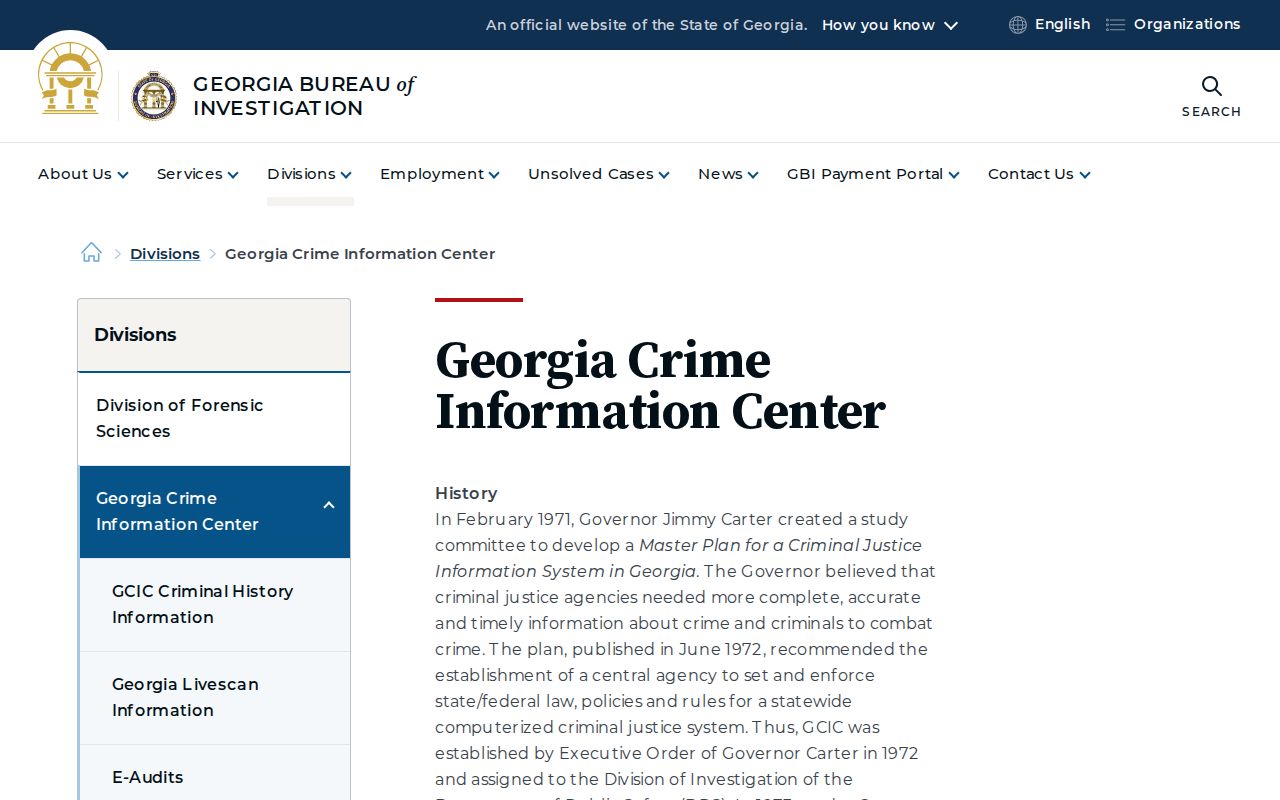
When an outcome is missing, return to the Franklin County court or arresting agency for source documents before asking GCIC to correct the cycle.
City-by-City Criminal Records in Franklin County
City police and municipal courts create records that may not begin at a county office. Lavonia publishes a police records channel and municipal court contact. Royston's boundaries span Franklin, Hart, and Madison counties, so the incident address and booking county matter. Canon is near the Hart County line and requires confirmation of its current police and court arrangement. These city routes lead back to Franklin County only when the arrest, custody, or prosecution actually belongs here.
Lavonia Record Check
2,143 in the 2020 Census · Police records, a published history product, and Municipal Court support
Royston Record Check
2,649 citywide in the 2020 Census · Confirm the county because Royston spans three
Canon Record Check
804 in the 2020 Census · Confirm current city coverage, then route county records correctly