
Canon Criminal History Checks
Begin a Canon criminal history search by identifying the kind of event involved. A city incident report belongs with the agency that made it. A booking belongs with the jail that accepted the person. A warrant or first appearance may produce a Magistrate Court record, while a filed felony belongs with the Franklin County Clerk of Superior and Juvenile Courts. Canon City Hall should confirm the city's current police coverage, municipal court schedule, lawful records custodian, and request method before a requester sends money or personal data.
No official online Canon docket, arrest log, police app, or public request form was verified during research. That gap makes a direct, layered search more reliable than a broad name query. Use a report, citation, booking, warrant, or case number when one is known.
- Ask Canon City Hall who currently provides police service and keeps city records.
- Request the source incident or arrest report from that confirmed custodian.
- Confirm the municipal court schedule and clerk route for ordinance or traffic matters.
- Call Franklin County offices for a booking, warrant paper, or felony file.
- Use an authorized agency or GBI process for a broader Georgia history.
Confirm Canon Police Record Custody
Do not assume Canon maintains a full-time police records unit. The official city homepage is the best first stop for live confirmation, but the research did not verify a stable police records page, online form, office hours, or fee schedule. Ask City Hall whether city personnel or the Franklin County Sheriff's Office covered the event date. Then ask for the lawful custodian's current contact method.
If a Canon officer created the report, the municipal custodian should explain how to seek it. If a sheriff's deputy responded, the sheriff's Records Supervisor handles sheriff-created material. State the date, location, report number, and exact record sought. The official Canon homepage supplies the image below.

The municipal page is a starting point, not proof that a particular police or court service is currently active.
Records at the Canon Police Department
Canon's current police arrangement requires live verification. If city police originated an incident, ask the confirmed custodian for the incident report, arrest report, citation record, or releasable media by its precise name. Give a narrow date range, street or location, involved name, and report number when available. A focused request is easier to locate and less likely to include unrelated protected material.
If the sheriff provided service, use the Franklin County Sheriff's Office Open Records process. The office identifies Records Supervisor Marcus Greer as custodian and accepts requests through its county-hosted form. A request delivered to another employee is not filed until it reaches the custodian. Charges may cover search, retrieval, redaction, supervised inspection, and copies. The first fifteen minutes of staff time are free, and standard black-and-white pages are listed at ten cents each.
Ask for segregable public portions if part of a report is withheld. Active-investigation facts, juvenile details, victim identifiers, medical data, confidential sources, and jail-security material may require redaction or withholding.
Canon Reports: City or Sheriff
The agency name on a citation, report receipt, or officer card is the best routing clue. Canon's location near the Franklin and Hart County boundary adds a second check: confirm the exact incident address and county. A Canon mailing address does not prove that Franklin County booked or prosecuted the matter.
Use City Hall for current city-custodian details. Use the Franklin Sheriff for sheriff-originated reports and Franklin detention questions. If another agency or county appears on the document, contact that source rather than asking Canon to recreate a record it never held. The source agency is also the starting point for correcting wrong arrest data later reported to GCIC.
Booking and Arrest Records in Canon
A Canon-area arrest report and a booking record are separate files. The arresting agency describes the event. Jail staff create a booking entry when they accept a person, record identity details, list charges as booked, note bond and release status, and capture fingerprints. For a Franklin County booking question, call the Sheriff or Detention Center at 706-384-2525.
No official Franklin public booking roster or Canon arrest blotter was verified. Call with the person's full name and approximate booking date, then ask for the booking identifier, charges as entered, bond, and release status. If routine jail information is not enough, request the booking record through the sheriff's Open Records Form. A booked charge is not a finding of guilt. The court file shows what was filed and how it ended.
Canon Warrant and First-Appearance Records
Magistrate Court may hold the first public court paper after a Canon-area arrest. It handles warrants, first appearances, and preliminary proceedings. Call 706-384-7473 with the name, date, and warrant or case number when known. An unserved warrant may be sealed, and the clerk cannot give legal advice.
The official Franklin County Magistrate Court page should be checked for current contact details.
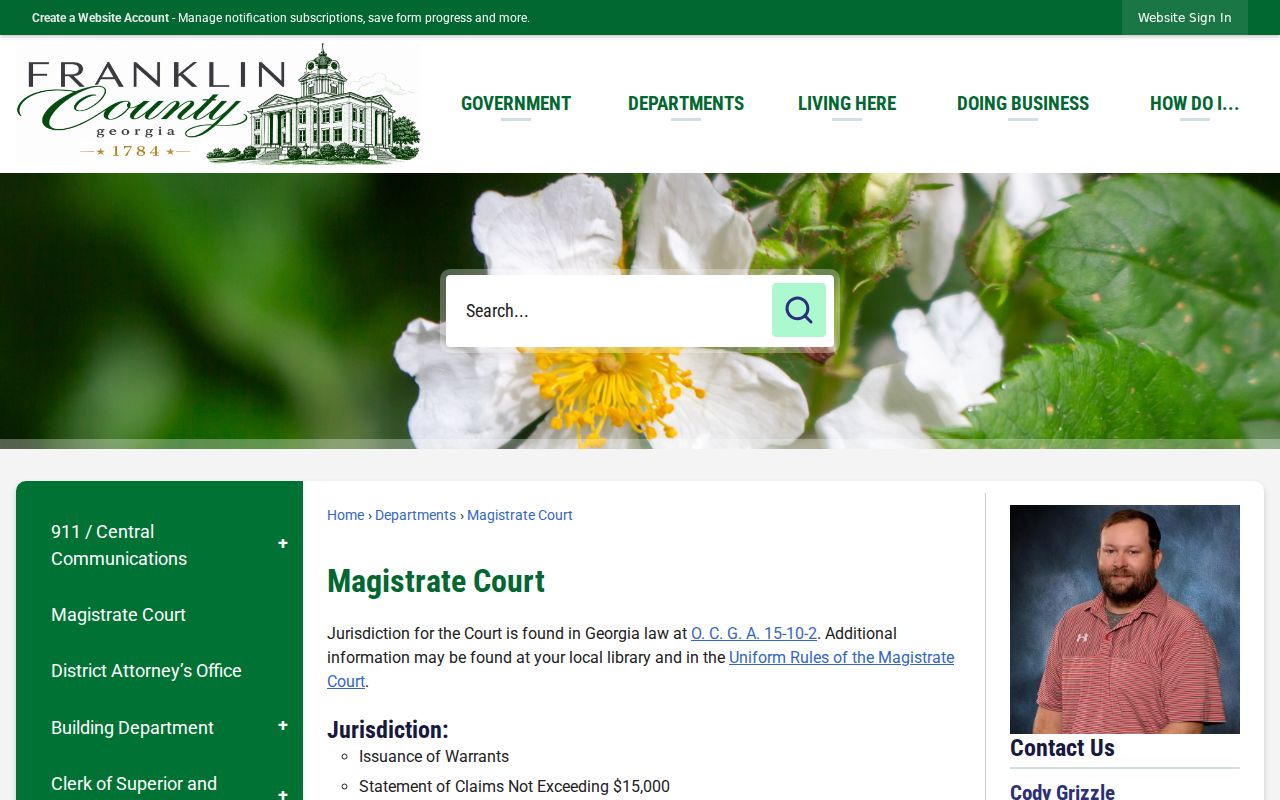
Magistrate papers explain the early stage, but a felony disposition must be followed into Superior Court.
The Canon Municipal Court File
Canon City Hall must confirm whether a municipal court is active, what schedule it follows, and who keeps its records. No stable city docket or online case-search system was verified. Georgia municipal courts may handle city ordinance cases and qualifying traffic or misdemeanor matters. They do not replace Franklin Superior Court for felony charges.
| Court status | Confirm Canon's current municipal court arrangement with City Hall. |
|---|---|
| Possible case types | City ordinance and qualifying traffic or misdemeanor matters. |
| Lookup channel | Clerk contact, counter inspection, or request as City Hall directs. |
| File contents | Citation, hearing entries, plea, disposition, sentence, and payment status when applicable. |
| Copies and fees | No current Canon schedule was verified; ask before ordering. |
Canon Traffic Records Need Routing
Not every Canon-area citation belongs in a municipal file. Franklin County Probate Court handles county traffic matters, while a city citation may follow the municipality's court arrangement. Read the issuing agency and court named on the ticket. The exact location also matters near the county line.
The official Franklin County Probate Court traffic instructions explain the county channel.
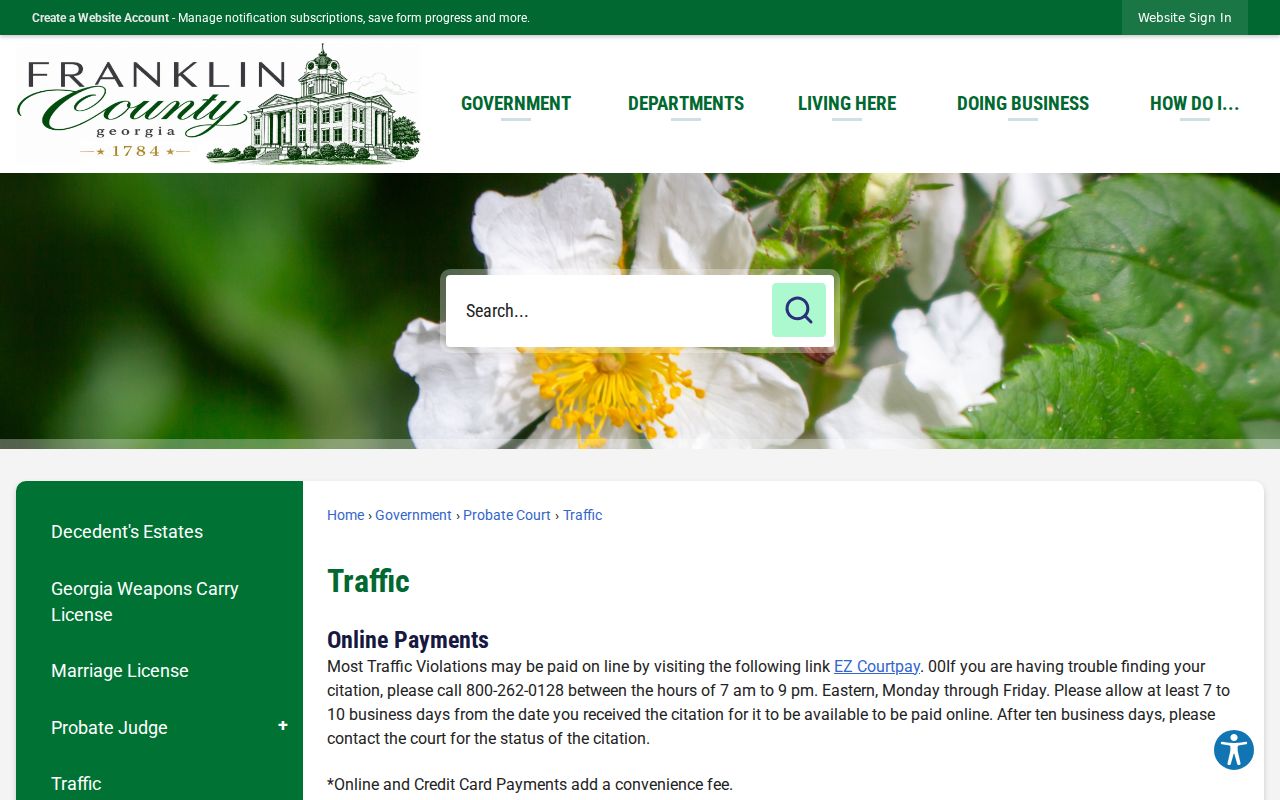
The county page does not mean every Canon ticket belongs there. The citation controls the route.
How Canon Records Reach the County
A Canon source agency creates the incident or arrest report. If Franklin County accepts the person, detention staff create a booking record and transmit fingerprint-supported arrest data. A prosecutor decides what to file. Court clerks keep the judicial case, and justice agencies report final dispositions to GCIC.
Record flow: Canon source agency › Franklin County Courts › Georgia Bureau of Investigation, Georgia Crime Information Center
Each stage answers a different question. The report describes the event. Booking proves custody, not guilt. The court file shows the charge and result. A GCIC history joins reported Georgia arrest cycles and dispositions, but source updates may lag. The Franklin County Court Case Lookup covers the broader court process.
Canon Felony Case Record Check
A felony tied to the Franklin side of Canon belongs with the Clerk of Superior and Juvenile Courts. Call 706-384-2514 with a full name, approximate filing or arrest year, and case number if known. Ask about public terminal searching, remote copies, and current certification terms. No official county criminal-case web portal was verified.
Look for the accusation or indictment, docket activity, plea, motions, disposition, judgment, and sentence. A certified judgment controls over a booking label. Juvenile files, sealed cases, grand-jury material, victim identifiers, and some unserved warrant material are restricted.
Names alone can produce a false match. Compare the case number, filing year, date of birth when lawfully displayed, and the originating agency. If a shorthand disposition is unclear, ask the clerk for the public judgment or sentencing order rather than guessing from a docket code. That source record is also useful when a reported Georgia criminal history lacks the final Canon-area outcome.
Canon Booking Versus Court Record
A booking charge records what jail staff received. A filed charge records the prosecutor's decision. A disposition records how the court resolved it. Keep those stages apart when an arrest appears without a final result.
| Record | Best source | What it establishes |
|---|---|---|
| Incident or arrest report | Confirmed source agency | Narrative and arrest facts |
| Booking entry | Actual booking jail | Custody, charge, bond, release |
| Filed felony case | Superior Court clerk | Docket, outcome, sentence |
| Georgia history | Authorized agency or GCIC | Reported statewide cycles |
When a disposition is missing from a Georgia history, obtain the source court document first. GCIC needs proper agency documentation before changing repository data.
Canon Record Access Rules
The Georgia Open Records Act governs records held by executive agencies, including releasable police and sheriff material. It calls for a response within three business days when records are not produced at once, but that period is not a promise of full production. Courts require a separate route. Franklin County directs judicial requests to the relevant clerk because Georgia's judiciary is not treated as an executive agency in the same way, though many court records remain open.
Ask for a public index and segregable public documents. Protected investigation material, private identifiers, juvenile content, sealed matters, grand-jury records, and security details may be withheld or redacted. A Canon request should name the record, date, source agency, and known identifier.
Georgia criminal-history dissemination follows separate GCIC rules. A person reviewing an own record may use the official GBI inspection and correction process, while authorized fingerprint submissions run through Georgia Applicant Processing Service at IdentoGO. There is no general statewide public self-service name portal. Local reports, court files, and the state history should therefore be compared as distinct records, not treated as copies of one database.
Key Statutes:
Georgia Open Records Act, O.C.G.A. §50-18-70 states the open-government policy and definitions.
O.C.G.A. §50-18-71 sets agency inspection, timing, and charge rules.
O.C.G.A. §50-18-72 lists exemptions that may require redaction.
O.C.G.A. §35-3-34 controls GCIC criminal-history dissemination.
O.C.G.A. §35-3-37 governs Georgia record restriction.