
Criminal Court Cases in Franklin County
Franklin County sits in Georgia’s Northern Judicial Circuit. Superior Court is the main felony trial court, and its clerk maintains accusations, indictments, docket entries, pleas, judgments, and sentences. Magistrate Court handles warrant applications, first appearances, some bond matters, and preliminary hearings. Probate Court keeps county traffic matters. Municipal clerks retain qualifying city ordinance, traffic, and misdemeanor files.
The office name matters. A Magistrate warrant proceeding does not turn that office into the felony trial clerk. Likewise, a city citation may never appear in the Superior Court index unless it is transferred or separately prosecuted. Follow the court printed on the citation, bond paper, accusation, or notice before making a request.
Which Franklin County Clerk Has It?
Route the request by the stage and charge. The Superior Court clerk is the proper source for filed felony cases. Magistrate Court may hold early criminal-process records, though an unserved warrant or related affidavit can be unavailable. Probate handles county traffic matters, and each municipal court keeps its own city docket.
| Record sought | Likely court | Useful identifier |
|---|---|---|
| Felony accusation, indictment, plea, judgment | Franklin Superior Court | Superior case number and full name |
| Warrant, first appearance, preliminary hearing | Franklin Magistrate Court | Warrant or related case number |
| County traffic file | Franklin Probate Court | Citation number |
| City ordinance or qualifying traffic case | Relevant municipal court | Municipal citation or case number |
When the file is absent, ask whether it was transferred, assigned a companion number, archived, sealed, or retained by another clerk. Do not assume “no result” means no proceeding occurred.
The official Franklin County Magistrate Court page gives the local contact route for early criminal process. Call 706-384-7473 with a warrant or related case number, full name, and approximate date when those details are known. Magistrate records can document a first appearance, preliminary hearing, or public warrant step, but they do not supply the later Superior Court judgment. An unserved warrant or its supporting affidavit may remain sealed. If the matter advanced as a felony, preserve the early identifier and ask the Superior Court clerk whether it maps to a different trial-court case number.
Franklin County Case Record Searches
No official free Franklin County criminal-case portal was verified. Georgia also lacks one comprehensive free statewide trial-court search. PeachCourt offers document access for participating courts, but coverage and charges vary, so it should not be represented as a complete Franklin criminal index. The reliable route is clerk identification, public docket inspection, and a copy order.
- Identify the court from the citation, charging paper, or hearing notice.
- Call the clerk and provide the full legal name plus a case number or approximate filing year.
- Confirm that the match belongs to the correct person before requesting documents.
- Inspect the public docket and select the accusation or indictment, plea, judgment, sentence, or order needed.
- Ask for an ordinary or certified copy and confirm the current charge and delivery method.
| Field Label | Type | Required | Notes |
|---|---|---|---|
| Defendant name | Text | Usually | Give the full legal name and known variants. |
| Case number | Text | Best identifier | Preserve leading letters and zeros. |
| Approximate filing year | Year | No | Helps narrow older or archived files. |
| Date of birth | Date | Restricted | Use only through a clerk-approved channel. |
| Document requested | Description | For copies | Name the docket, charge, judgment, sentence, or order. |
| Certification | Yes or no | No | Certified copies carry clerk authentication and a separate charge. |
A traffic allegation needs the same routing care. The Franklin County Probate Court traffic page is the official county channel for qualifying county traffic matters, while a municipal citation stays with the city court named on the ticket. Use the citation number, issuing agency, appearance date, and court printed on the document. Do not send a Lavonia municipal citation or a Royston matter to Probate Court merely because the event occurred near Franklin County. Royston spans three counties, so the incident location and issuing agency must be confirmed first.
Before ordering copies, ask whether the clerk found an index match or reviewed the actual file. Request count-level dispositions when a case contains more than one charge. One count may be dismissed while another ends in a plea or judgment. For an own-record correction, restriction request, or other consequential use, an ordinary docket printout may not be enough. Ask which signed judgment, sentence, or certified disposition states the final result, what identification the clerk requires, how payment may be made, and whether the office can send the record remotely.
Franklin Felony Files at Lavonia Road
The official clerk page identifies the Franklin County Clerk of Superior and Juvenile Courts as the local felony-file custodian.
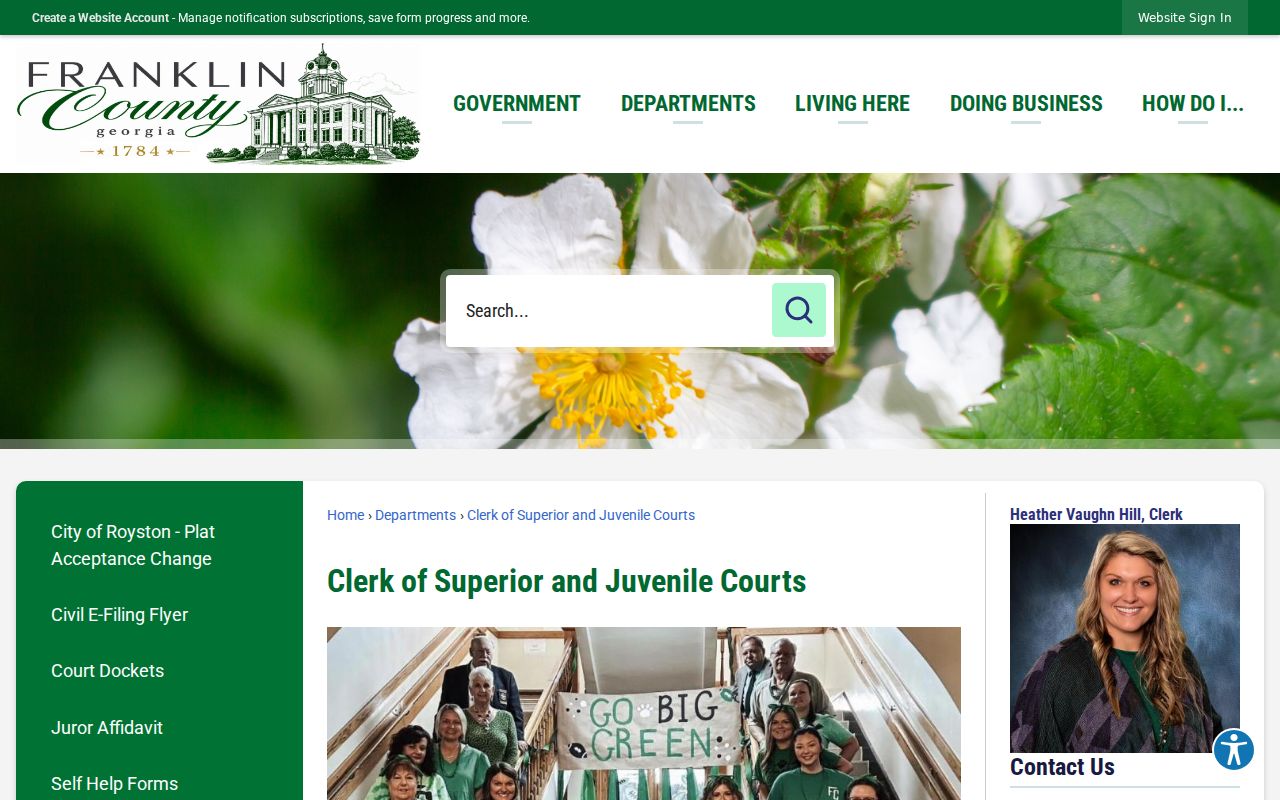
The office is at 9592 Lavonia Road, Carnesville, Georgia 30521, lists 706-384-2514, and publishes weekday hours of 8:00 a.m. to 5:00 p.m. Start by asking staff to identify the case and public docket. Then name the exact paper needed. Current copy and certification fees should be confirmed with the clerk rather than inferred from fees charged by an executive agency.
Superior and Juvenile Courts Clerk
9592 Lavonia Road
Carnesville, GA 30521
706-384-2514
Monday through Friday, 8:00 a.m. to 5:00 p.m.
What a Criminal Case File Contains
A court file records the prosecution, not merely the booking allegation. Its header identifies the court, circuit, case number, filing date, parties, and status. Charging instruments list counts and cited statutes. Docket entries track filings and hearings. The signed judgment and sentence supply the controlling outcome when a portal label or arrest entry is unclear.
| Case Number & Court | Franklin County, Northern Judicial Circuit, filing date, action number, parties, and status. |
|---|---|
| Charging Document | Accusation or indictment with separate counts and cited Georgia statutes. |
| Docket Entries | Filings, motions, bond orders, notices, plea or verdict, judgment, sentence, and later orders. |
| Hearing Dates | Arraignment, calendar calls, motions, plea, trial, sentencing, or revocation events when public. |
| Disposition & Judgment | Count-level outcomes such as conviction, dismissal, nolle prosequi, acquittal, or dead docket. |
| Sentence & Conditions | Public confinement, probation, fines, restitution, and First Offender treatment when legally visible. |
Protected identifiers, juvenile material, sealed files, grand-jury matter, and victim-sensitive content may be omitted or redacted. Availability also depends on public status and digitization.
Read Franklin Case Counts Separately
One case can contain several counts with different outcomes. A count may be amended, merged, dismissed, tried, or resolved by plea. “Open” can reflect pending administrative work and does not show guilt. A dead-docket entry suspends prosecution; it is not an acquittal. Nolle prosequi means the prosecutor formally declined to proceed on that charge at that time, while dismissal and acquittal arise through different legal actions.
- Disposition
- The recorded result for a specific charge.
- Accusation
- A prosecutor’s charging instrument used in cases allowed by Georgia law.
- Indictment
- Charges returned by a grand jury.
- Certified disposition
- A clerk-authenticated copy of the court’s recorded outcome.
For personal record correction or restriction work, request the final signed result and ask whether companion case numbers exist. A shorthand case label rarely supplies enough detail.
Criminal Case Stages in Franklin County
A felony may begin with a warrant or arrest and early review in Magistrate Court. The prosecutor then decides what charge to file in Superior Court, which can differ from the booking label. Arraignment addresses the plea. Motions and discovery follow, then a plea or trial produces a disposition. Sentencing records the court’s order.
Case flow: Charges Filed › Arraignment › Pretrial › Plea or Trial › Disposition › Sentencing
The Northern Judicial Circuit District Attorney prosecutes Franklin Superior Court felonies. The official Franklin DA page identifies the county office in Carnesville.
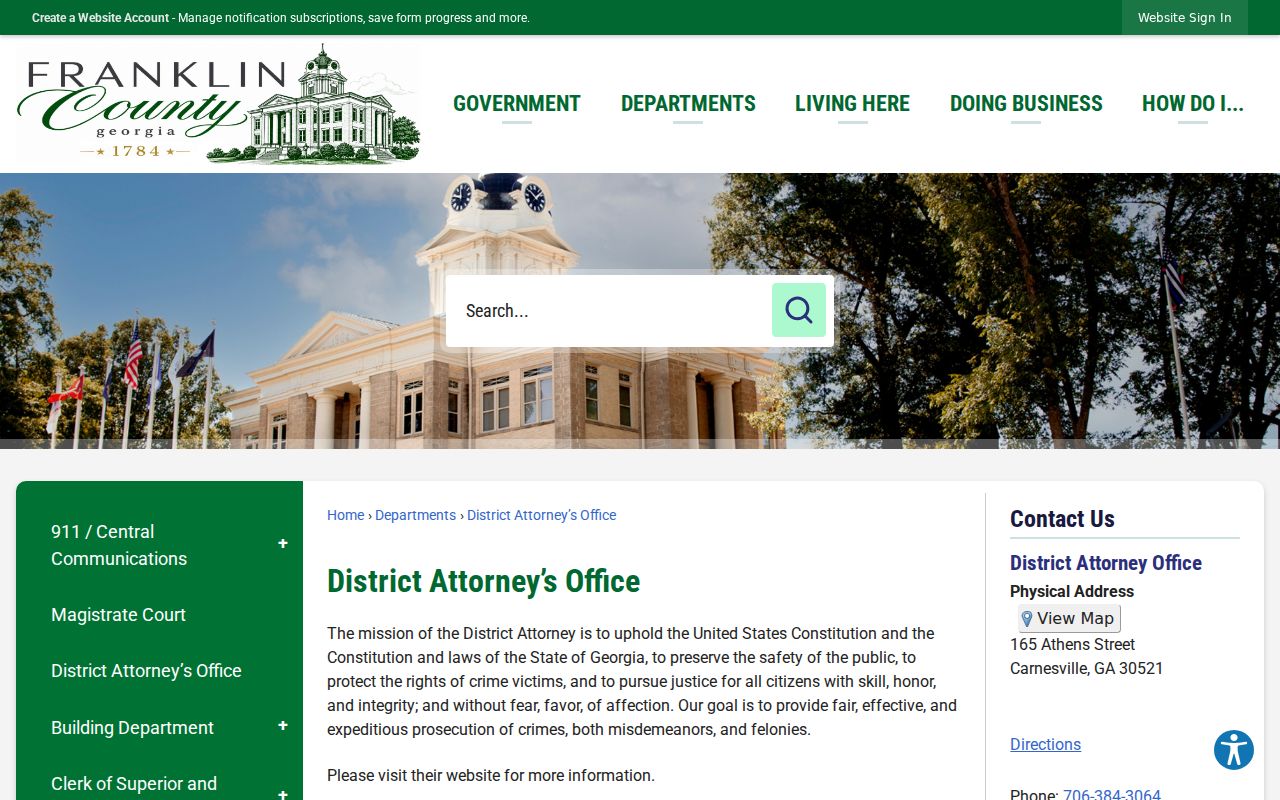
The DA may file, change, or decline charges, but the clerk remains the public court-file custodian. The DA office is not a substitute docket search.
Franklin Dispositions Can Repair GCIC
A Georgia criminal-history cycle may show an arrest without the final court result when source data was delayed or incomplete. GCIC cannot change that record from a person’s statement alone. Courts, prosecutors, probation, parole, and other source agencies must transmit or authorize disposition changes.
Inspect your own history through the official process, identify the incomplete arrest cycle, and obtain the certified Franklin disposition. Match it by arrest date, state identifier, Offender Tracking Number, or other accepted identifiers. Then follow GBI’s criminal-history correction instructions. The signed court result controls over an old booking label.
Federal Cases Bypass Franklin County Courts
Franklin County lies in the U.S. District Court for the Northern District of Georgia. Federal charges do not appear merely by searching the Franklin Superior Court clerk. Federal dockets and filings use PACER after registration, with charges governed by the current federal fee schedule.
The official PACER portal is the federal access channel.
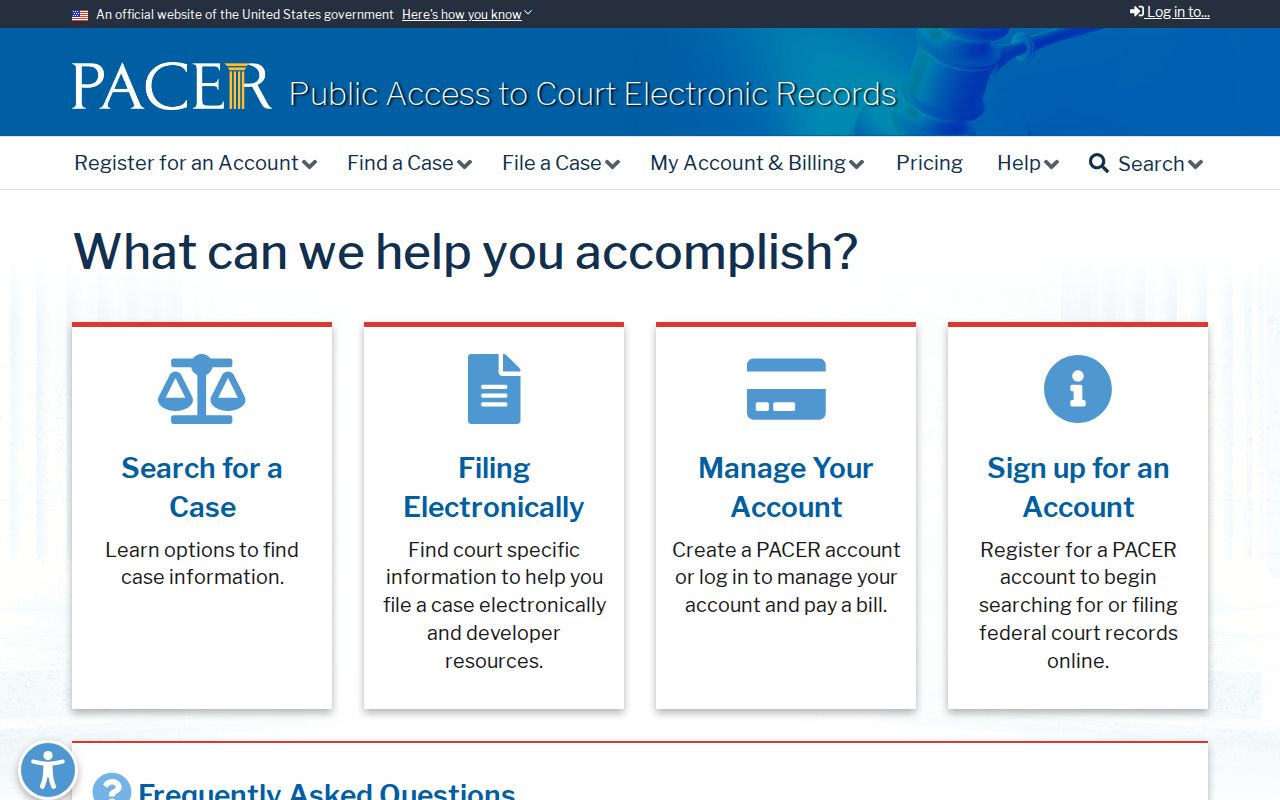
Use the official Northern District pages to confirm the correct division and filing location. Federal custody belongs to federal systems, not the Franklin jail or Georgia Department of Corrections locator.
Access Rules for Case Records
Georgia court records are not obtained by treating the judiciary exactly like an executive agency under the Georgia Open Records Act. Franklin County routes judicial requests directly to the relevant clerk, and many court records remain open for inspection through court law and rules. Ask for the public index and segregable public documents rather than sending an executive-branch demand to county administration.
Access distinction: the Georgia Attorney General’s open-government resources explain the state’s executive-agency framework, while the appropriate clerk controls access to Franklin judicial files.
Sealed cases, juvenile files, grand-jury material, victim identifiers, protected personal data, and unserved warrant records may not be open like an ordinary docket. If a case does not appear, ask the clerk whether access is restricted, the file is archived, or the matter sits in another court. A negative search is not proof that no case exists.